
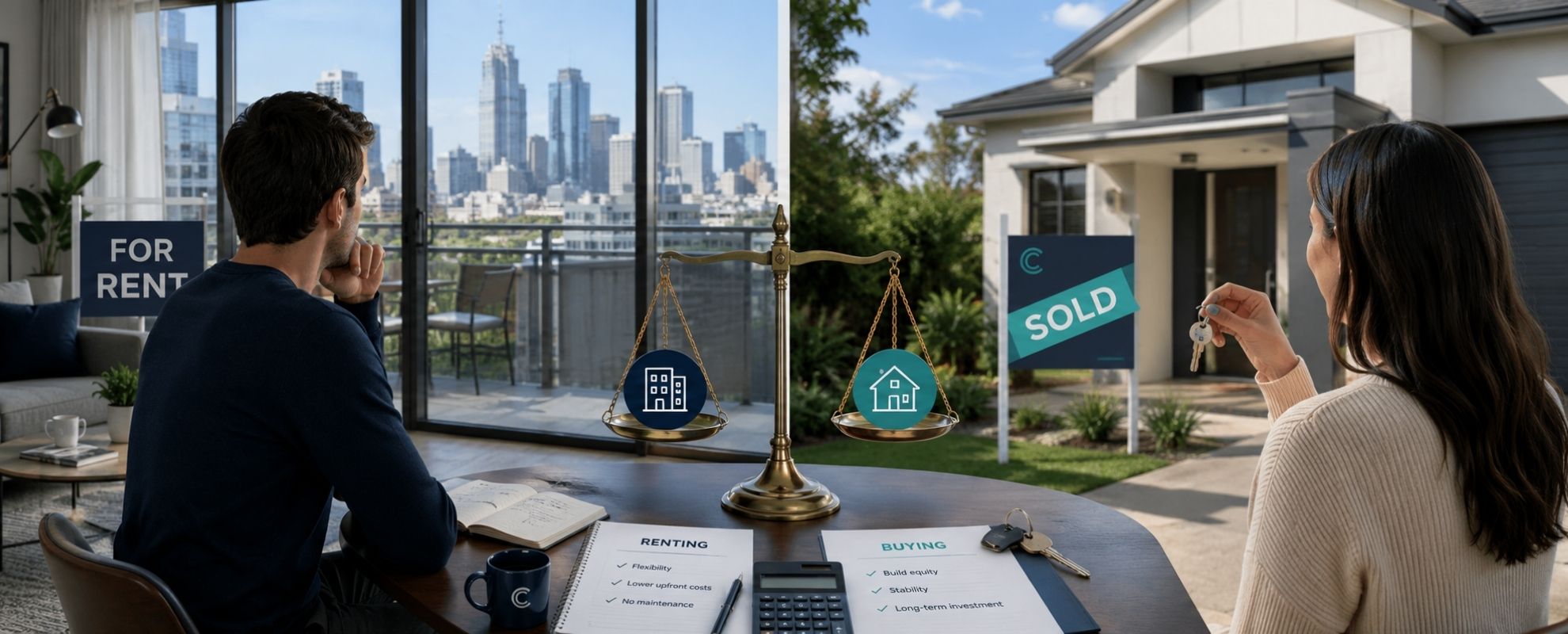
A renting vs buying Melbourne cost analysis 2026 must account for the current RBA cash rate of 4.35%, Melbourne’s median house price, rental yields, stamp duty, maintenance costs and opportunity cost of the deposit. The old assumption that renting is throwing money away ignores the reality that buying also involves significant costs beyond the mortgage — and in some scenarios, renting and investing the difference can deliver a better financial outcome. This guide runs the actual numbers for Melbourne in August 2026 so you can make an informed decision based on your specific situation rather than property market sentiment alone.
The rent money dead money myth Australia persists because it ignores the non-recoverable costs of home ownership. When you buy a property, the interest portion of your mortgage repayment, stamp duty, council rates, water rates, building insurance, maintenance, strata fees (for apartments) and opportunity cost of your deposit are all costs that do not build equity. Only the principal portion of your repayment builds equity — and in the early years of a 30-year mortgage at 6.50%, the principal component is less than 25% of each repayment.
A renting vs buying Melbourne cost analysis 2026 shows that total ownership costs often exceed renting costs in the first three to five years. The breakeven point where buying becomes cheaper typically falls between five and eight years depending on property growth and interest rates.
On a $750,000 Melbourne property with a 20% deposit ($150,000), monthly mortgage repayments at 6.50% are approximately $3,790. In the first year, approximately $960 per month goes to principal and $2,830 per month goes to interest — the interest component alone is comparable to renting a similar property. Add council rates, insurance, maintenance and the opportunity cost of the $150,000 deposit, and the total cost of ownership often exceeds the total cost of renting in the first three to five years. The rent money dead money myth Australia oversimplifies a nuanced financial calculation.
The breakeven point renting vs owning Melbourne is the point at which the total cost of owning — including all non-recoverable costs plus equity built — exceeds the total cost of renting plus the returns earned by investing the deposit elsewhere. In Melbourne in August 2026, the breakeven point for a median-priced property typically falls between five and eight years depending on property price growth, interest rates and rental yield.
If Melbourne property prices grow at 3% per year and the deposit earns 5% invested in shares, the breakeven point is approximately seven years. If property prices grow at 5% per year, breakeven shortens to four to five years. If prices are flat or declining — as has occurred in parts of Melbourne in 2026 with national prices falling 0.7% in July alone — the breakeven extends beyond eight years. Clarity Financial Solutions models the breakeven for your specific property, income and serviceability position to determine whether buying now is financially optimal or whether continuing to rent delivers a better outcome.
A total cost of ownership vs renting comparison for Melbourne in 2026 includes every cost on both sides. Buying costs: deposit ($150,000 on a $750,000 property at 80% LVR), stamp duty (approximately $40,070), conveyancing ($1,200), building and pest inspection ($600), mortgage interest ($33,960 per year at 6.50%), council rates ($2,200 per year), water rates ($1,200 per year), building insurance ($1,800 per year), maintenance ($3,750 per year at 0.5% of property value), and LMI if applicable.
The ownership advantage emerges over time as property values grow, the mortgage principal reduces and rents increase. The total cost of ownership vs renting comparison shifts toward buying after the breakeven point — which Clarity Financial Solutions calculates for your specific scenario.
When does renting make more financial sense applies to several common Melbourne scenarios in 2026. Scenario one: you plan to stay in the area for less than five years — the stamp duty and transaction costs of buying may exceed the equity built over a short holding period. Scenario two: you are saving for a larger deposit — renting while building genuine savings and avoiding LMI can save more than buying immediately at a higher LVR.
Scenario three: you earn a higher return investing your deposit elsewhere — if your investment returns exceed the after-tax capital growth on a Melbourne property, renting and investing is more profitable. Scenario four: your career is mobile — buying locks you to a location and selling within two to three years often results in a net loss after transaction costs. Clarity Financial Solutions does not advocate buying in every situation. Our renting vs buying Melbourne cost analysis 2026 recommendation is based on your individual numbers — not market enthusiasm or pressure to enter the market.

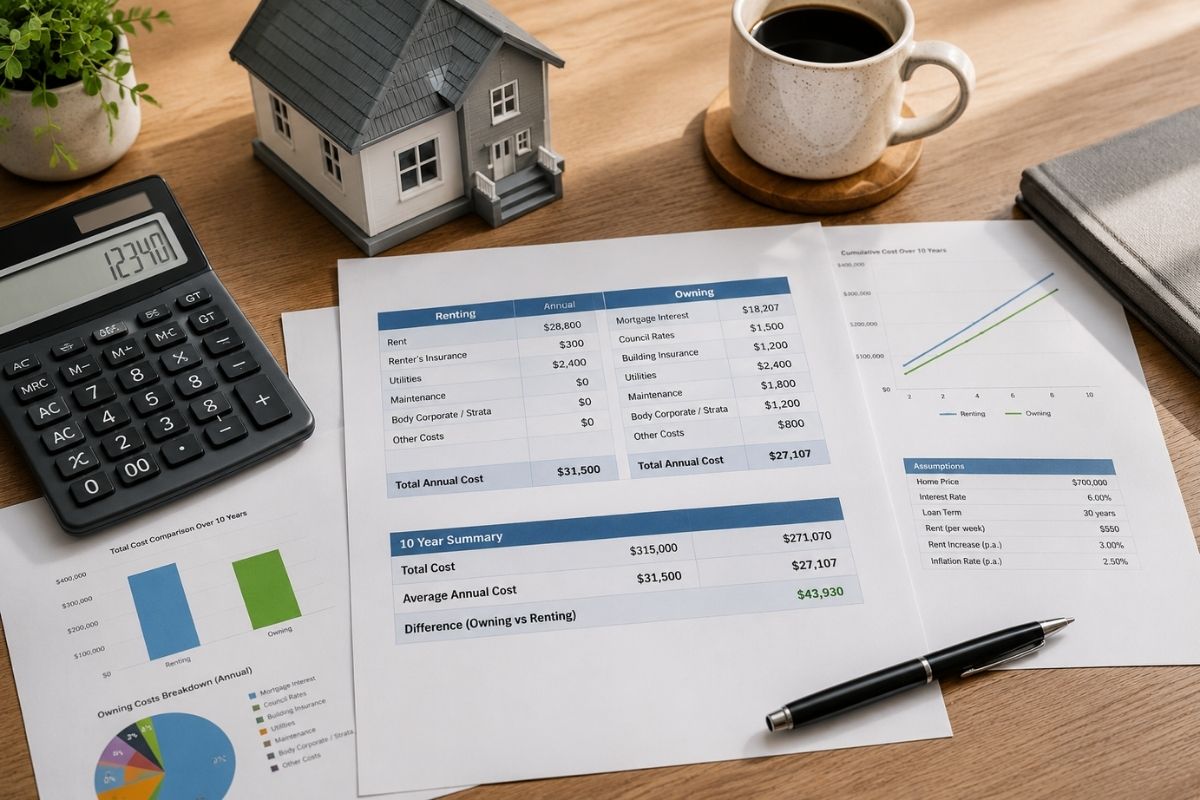
Clarity Financial Solutions approaches the renting vs buying Melbourne cost analysis 2026 decision by modelling your specific numbers: income, savings, existing debts, expected holding period, likely property growth in your target suburb, current rental cost and investment return assumptions. We compare the total wealth position after 5, 10 and 15 years under both scenarios — renting and investing versus buying — and recommend the approach that builds more wealth for your circumstances.
If buying is the better outcome, we structure the loan to minimise interest cost and maximise equity growth. If renting is currently the better outcome, we help you build a savings and investment plan that positions you for purchase when the numbers shift in favour of buying. This analysis is provided free as part of our initial consultation — because the right answer is the one that makes you wealthier, whether that involves a mortgage or not. Explore how our offset and redraw strategies further optimise the ownership cost for those who decide to buy.

In the first three to five years, renting is often cheaper than buying in Melbourne when all costs are included — mortgage interest, stamp duty, rates, insurance and maintenance. After the breakeven point (typically five to eight years), buying becomes cheaper as equity builds and rents increase. Clarity Financial Solutions models both scenarios for your specific situation.
No. Rent pays for housing — just as mortgage interest, rates, insurance and maintenance pay for housing when you own. Only the principal component of your mortgage builds equity. In the early years of a loan at current rates, the principal component is less than 25% of each repayment. The rest is non-recoverable cost — similar in nature to rent.
Typically five to eight years in Melbourne at current prices and interest rates. If you plan to stay less than five years, transaction costs (stamp duty, agent fees, conveyancing) often exceed the equity built. The exact breakeven depends on property price growth, your interest rate and your deposit size.
If your investment returns consistently exceed the after-tax capital growth on a Melbourne property — and you have the discipline to invest the deposit and savings difference — renting and investing can build more wealth. However, property provides leveraged growth and forced savings that many investors find difficult to replicate with voluntary investment discipline.
Yes — when the numbers support it. Clarity Financial Solutions provides an objective renting vs buying analysis based on your specific income, savings, expected holding period and target suburb. If renting currently delivers a better wealth outcome, we recommend it and help you prepare for purchase when the numbers shift in your favour.
Commonly forgotten buying costs include: stamp duty (approximately $40,070 on a $750,000 property in Victoria), building and pest inspection ($500 to $800), conveyancing ($800 to $2,200), council rates ($1,800 to $3,000 per year), water rates ($1,000 to $1,500 per year), building insurance ($1,500 to $2,500 per year), maintenance (0.5% to 1% of property value per year), and the opportunity cost of the deposit.

This article was prepared by Preeti Sidhu, Mortgage Broker at Clarity Financial Solutions (ACL 475676). Information is general in nature and does not constitute financial advice. Always consult a licensed mortgage broker before making any financial decisions.

A renting vs buying Melbourne cost analysis 2026 based on your actual numbers is the only way to make this decision with confidence. Clarity Financial Solutions provides this analysis free — and recommends whichever path builds more wealth for your circumstances. Learn more about our first home buyer services when you are ready to move from renting to owning.
WhatsApp us