

Discharge fees switching lenders Australia are the costs your current lender charges when you pay out your existing loan and move to a new lender. These fees include the mortgage discharge fee, break costs on fixed-rate loans and government registration fees for removing the old mortgage and registering the new one. Understanding these costs upfront is essential before deciding to refinance — because the exit costs must be weighed against the ongoing savings the new loan delivers. This guide breaks down every discharge fee, what each one covers and how to calculate whether switching is worth it in 2026.
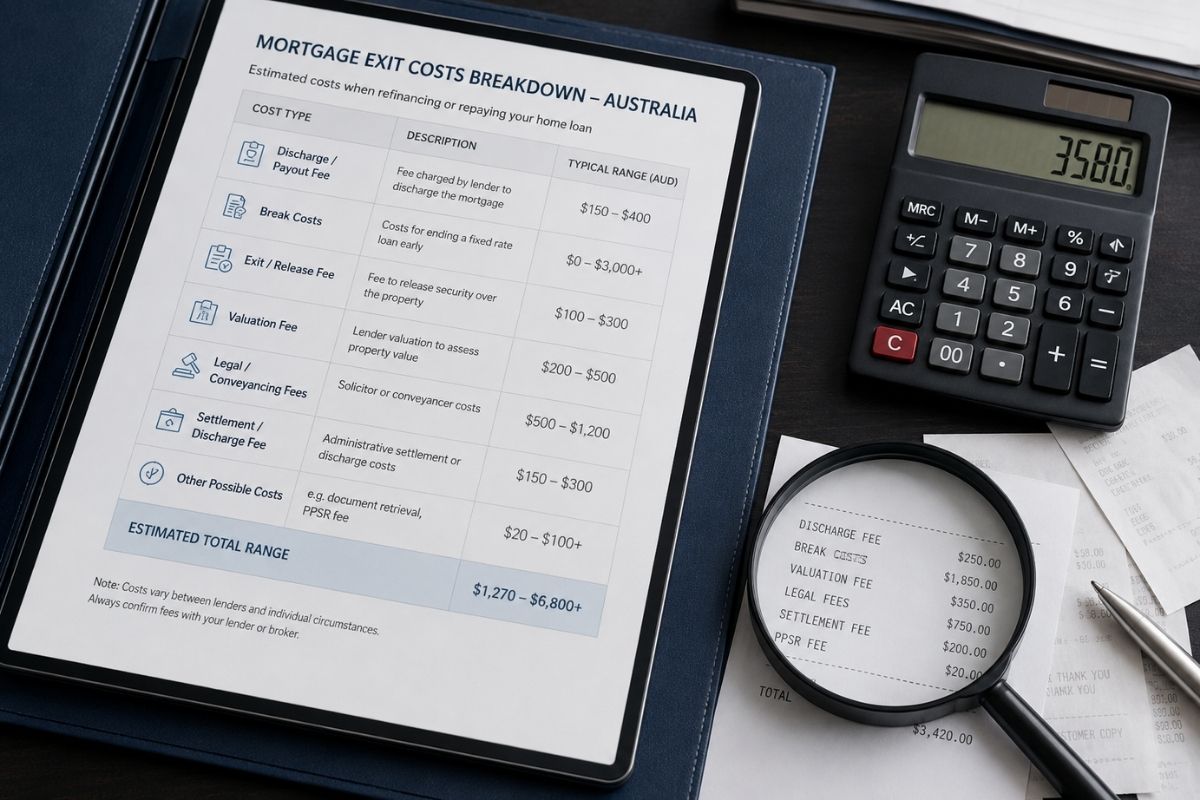
How much does it cost to leave your bank depends on the type of loan, whether any portion is fixed-rate and your state’s government registration fees. The core costs include: a mortgage discharge fee of $150 to $400 charged by your current lender to process the release of the mortgage, a title deregistration fee of approximately $146.40 in Victoria (2026 rate) paid to Land Use Victoria to remove the old mortgage from the title, and a new mortgage registration fee of approximately $146.40 to register the incoming lender’s mortgage.
Discharge fees switching lenders Australia typically total $500 to $1,200 for variable-rate loans — including the lender discharge fee, government deregistration and new registration charges. Fixed-rate loans may incur additional break costs.
On top of these fixed costs, the new lender may charge an application or establishment fee of $0 to $600 depending on the product, a valuation fee of $0 to $500, and potentially lender’s mortgage insurance if the new loan exceeds 80% LVR. For variable-rate loans with no fixed component, the total switching cost is typically $500 to $1,200 all-in. For loans with a fixed-rate portion, break costs can add thousands — making the calculation more complex.
A mortgage exit costs breakdown Australia shows a clear divide between variable and fixed loans. Variable-rate loans carry only the standard discharge and registration fees — no penalties for early repayment. Fixed-rate loans carry an additional break cost that compensates the lender for the interest income they lose when you exit the fixed term early. Break costs are calculated using the difference between your contracted fixed rate and the current wholesale rate for the remaining fixed term, multiplied by the outstanding balance and remaining months.
In August 2026 with the RBA cash rate at 4.35% and wholesale rates elevated, break costs on fixed loans originated at lower rates in 2021–2022 have largely disappeared — because current rates are higher than or equal to most legacy fixed rates. However, borrowers who fixed at rates above 6.00% during 2025–2026 may face minimal break costs if wholesale rates have moved lower since their lock-in date. Clarity Financial Solutions calculates your exact break cost before recommending any refinance or repricing strategy.
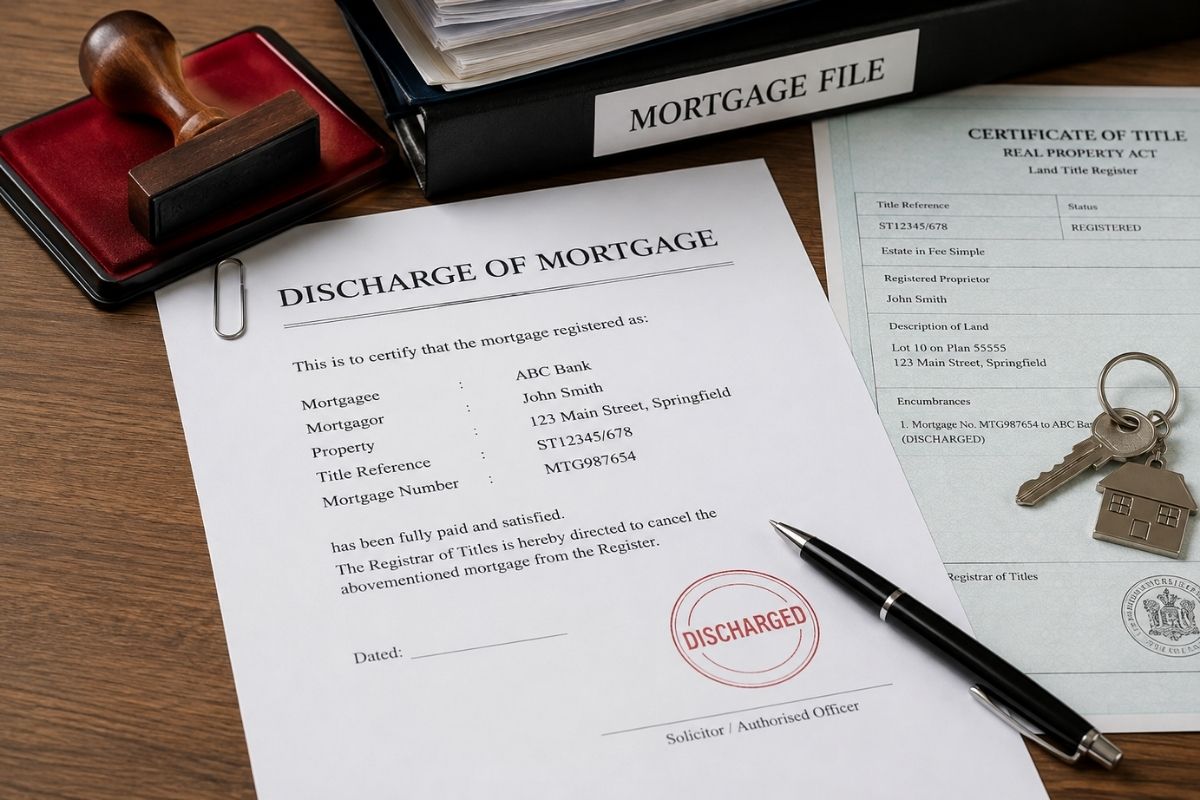
The deregistration of mortgage fee explained simply: when you switch lenders, the outgoing lender’s mortgage must be legally removed from the property title held by Land Use Victoria. This removal — called a discharge of mortgage — requires a government fee. In Victoria, the fee for discharging a mortgage is approximately $146.40 as of 2026. The incoming lender then registers their new mortgage on the same title for the same fee. Both fees are typically paid at settlement through the PEXA electronic platform.
These government fees are non-negotiable and apply regardless of which lender you are moving to or from. They are separate from the discharge administration fee charged by your outgoing lender for processing the discharge internally. The total government cost of switching is approximately $292.80 in Victoria — the sum of the discharge and new registration fees. This cost is the same whether you are switching from a major bank to a non-bank lender or between two major banks.
Is switching lenders worth the exit costs requires a breakeven calculation: total switching costs divided by monthly savings on the new loan. If total exit costs are $1,000 and the new loan saves $250 per month in interest, the breakeven period is four months. After four months, every dollar saved is a net gain. If total exit costs are $5,000 and savings are $150 per month, breakeven is 33 months — nearly three years before you benefit.
Clarity Financial Solutions models the complete switching cost versus ongoing savings for your specific loan amount, remaining term and rate difference. We also negotiate with your current lender for a rate match or loyalty repricing before recommending an external refinance — because the cheapest switch is sometimes no switch at all.
Discharge fees switching lenders Australia are manageable when the broker coordinates the entire process. Clarity Financial Solutions minimises your switching costs by: first attempting a rate negotiation or repricing with your current lender (which carries zero exit costs), then comparing the total cost of switching against the ongoing savings across 40+ lenders, and finally selecting a new lender that offers fee waivers, cashback incentives or establishment fee discounts that offset the discharge costs.
Many non-bank and digital lenders in 2026 waive application fees entirely and offer cashback incentives of $2,000 to $4,000 for refinancing borrowers. When these incentives exceed the total discharge fees switching lenders Australia charges, the net cost of switching becomes negative — you are paid to move. Clarity Financial Solutions identifies these opportunities as part of every repayment reduction review at no cost to you.
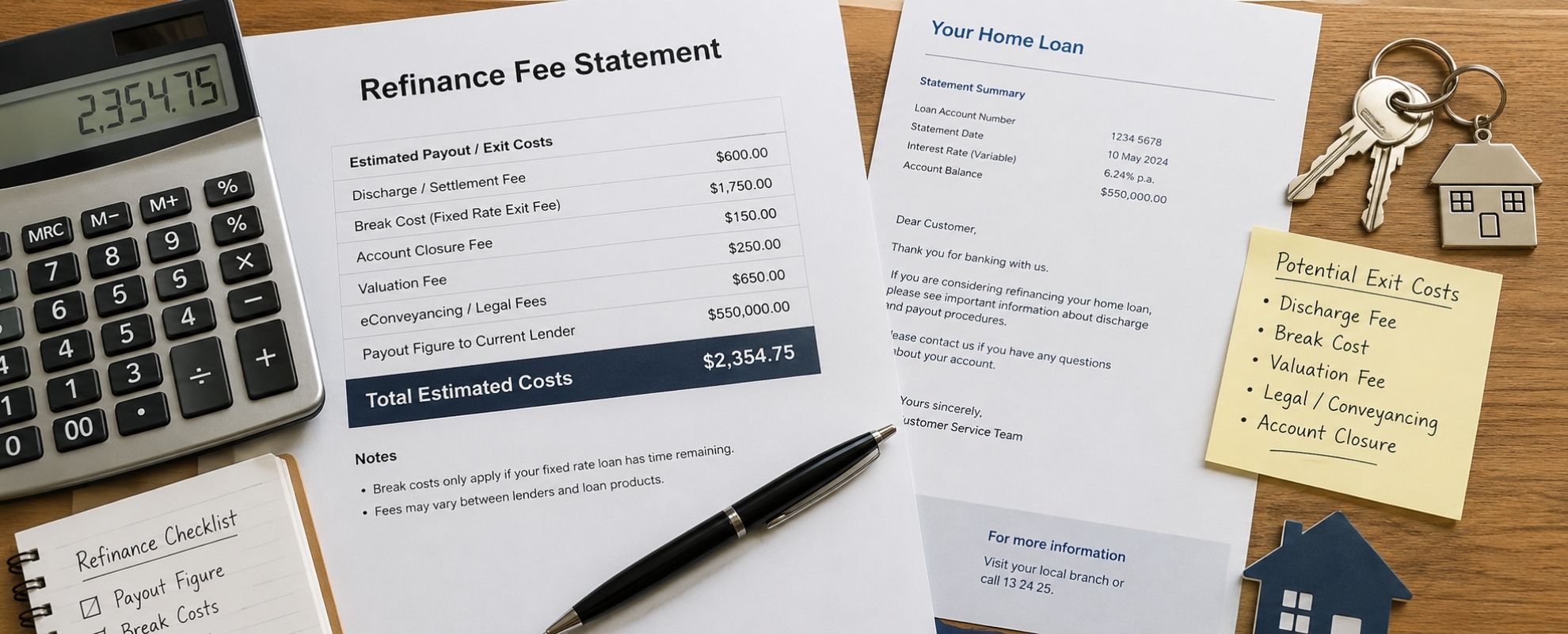
The typical cost of switching home loans in Australia ranges from $500 to $1,200 for variable-rate loans — including the lender discharge fee ($150–$400), government deregistration fee (approximately $146.40 in Victoria) and new mortgage registration fee (approximately $146.40). Fixed-rate loans may incur additional break costs depending on the rate differential and remaining term.
A mortgage discharge fee is the administration charge your current lender applies to process the legal release of their mortgage from your property title. It covers the internal paperwork, PEXA processing and communication with the incoming lender. Fees range from $150 to $400 depending on the lender.
No. Variable-rate home loans in Australia do not carry break costs or early repayment penalties. You can pay out a variable loan at any time without penalty. The only costs are the standard discharge fee and government registration fees. Break costs apply only to the fixed-rate portion of a loan.
Yes. Many lenders offer cashback incentives of $2,000 to $4,000 for refinancing borrowers. If the cashback exceeds your total discharge and switching costs, the net cost of moving is negative — you are effectively paid to switch. Clarity Financial Solutions identifies the best cashback offers across 40+ lenders for every refinance.
Repricing — asking your current lender for a lower rate without switching — carries zero exit costs and no new application process. If your lender matches or comes close to the best market rate, repricing is the most cost-effective option. Clarity Financial Solutions always attempts repricing first before recommending an external refinance.
No. Clarity Financial Solutions is paid by the receiving lender upon settlement — the service is 100% free to you. We handle the full refinance process including discharge coordination, new application, valuation, settlement and follow-up rate reviews at no cost.

This article was prepared by Preeti Sidhu, Mortgage Broker at Clarity Financial Solutions (ACL 475676). Information is general in nature and does not constitute financial advice. Always consult a licensed mortgage broker before making any financial decisions.

Discharge fees switching lenders Australia are a one-off cost that must be weighed against years of ongoing savings on a better rate. Clarity Financial Solutions calculates this breakeven for every refinance and always attempts repricing first. Explore how our offset vs redraw comparison can further reduce your interest costs after switching.
WhatsApp us